When I heard the word “meek” in the Bible, I used to cringe. In my mind, meekness was the opposite of being a “manly man.” I always pictured a meek person as the kid the coach placed into right field so he could chase butterflies instead of the ball, or the little boy who would rather play with dolls than trucks. To me, “meek” meant weak and timid—nothing like a man of courage. I was judging the word by its modern, watered-down meaning.
“Now the man Moses was very meek, more than all people who were on the face of the earth.” – Numbers 12:3

Take Charlton Heston’s portrayal of Moses in The Ten Commandments, for example. That Moses didn’t look anything like the weak, timid guy I associated with the word “meek.” Heston’s Moses was the ultimate manly man—chiseled jaw, booming voice, the kind of leader who could stare down Pharaoh, call down plagues, part the Red Sea, and convince an entire nation to follow him into the desert.
So when the Bible calls Moses meek (Numbers 12:3 says he was the most meek man on the face of the earth), I was confused. How could the same guy who shattered the golden calf and faced God on Mount Sinai be described as “meek”?
The Bible contains over 31,000 verses and more than 800,000 words. The word “meek” (or its forms) appears only about 21 times in the entire text. Out of 800,000+ words, how important could one little word really be?
Apparently, very important—because Jesus Himself chose it for one of the eight Beatitudes, the core character traits He says every citizen of the kingdom of heaven should pursue. In Matthew 5, during the Sermon on the Mount, Jesus opens with these famous words:
“Blessed are the meek, for they shall inherit the earth.”
If “meek” were just a throwaway term, why would the Son of God spotlight it right there in the opening lines of His most famous sermon?
Pastor David Guzik, in his excellent Enduring Word commentary, makes an important distinction: the eight Beatitudes are not the same thing as the various spiritual gifts God gives individually to believers. The Beatitudes are eight spiritual character traits or attitudes that aren’t mutually exclusive—every single Christian is called to pursue and grow in all of them. So… can you guess which one I personally wrestled with for years? 😅
“Blessed are the meek, for they shall inherit the earth.”
– Matthew 5:5
Pastor Guzik further teaches the meaning of meek is not to be confused with today’s understanding of the word. The Ancient Greek word for “meek” in the Bible is “praus” and it is translated as “strength under control.”
… it (meek) is power under control, an inner strength that entrusts personal rights to God rather than demanding them. – BibleHub.com
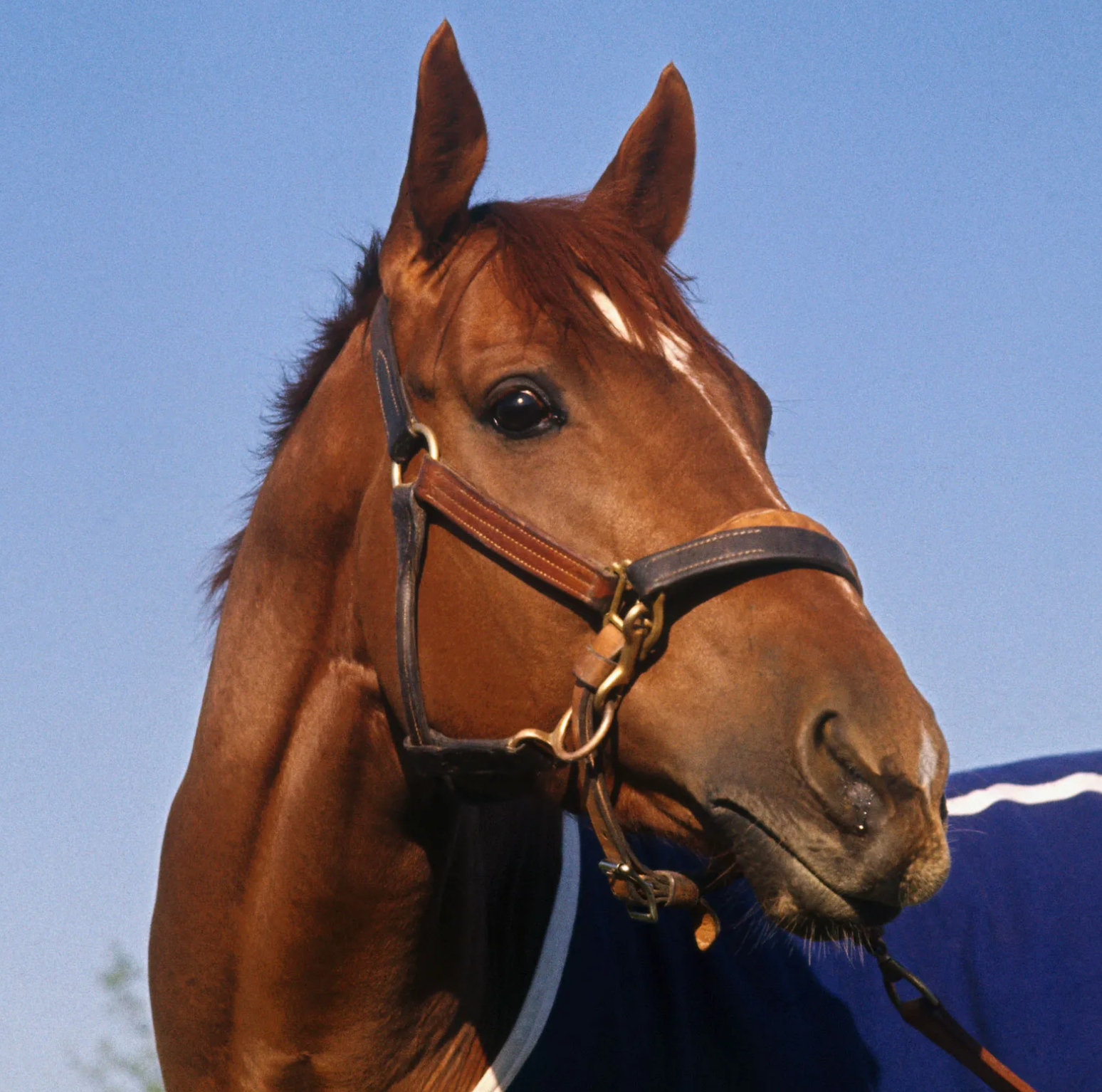
Big Red was the embodiment of Meek

In 1973, Secretariat (affectionately nicknamed Big Red) became only the ninth horse in history to win the Triple Crown — the Kentucky Derby, the Preakness Stakes, and the Belmont Stakes — the most prestigious series of races for three-year-old Thoroughbreds.
And he didn’t just win. He demolished the field. Secretariat still holds the outright track records in all three races — records set more than fifty years ago that no horse has come close to breaking.
Secretariat had explosive, almost frightening strength — yet every ounce of it was perfectly submitted to his rider’s guidance. Raw power, completely harnessed. Secretariat was the embodiment of “power under control”.
What would this 1,200 pound animal achieved
as a stallion in the wild?
Nothing!

Had Secretariat lived a life solely to please his immediate pleasures and whims, he would have remained unremarkable. Instead, by responding to the bit and reins guided by his 110 lb. jockey, Ron Turcotte, he became a legend in the horse racing world, as his jockey guided him into the record books.
Thanks to Pastor Guzik’s teaching of the true meaning of the Greek word “praus” (meek) as it was meant in the Bible, I have come to understand why it is a significant trait all Christians should aspire to emulate. I appreciate the concept of being a strong stallion, yielding to God’s will and letting His Holy Spirit guide my path with divine reins.
God has granted each of us the gift of free will. We can choose to live like a wild stallion, chasing our own fleeting desires in this world, or we can rise up and surrender to His divine will. Paradoxically, choosing the ways of this world doesn’t bring true freedom. Instead, it enslaves us to the temporary titles and rewards the world offers. In contrast, submitting to God’s will is the first step toward genuine freedom—freedom from the death this world brings, freedom to embrace the life God designed for us, and freedom to dwell in His presence for eternity.
Your comments are welcome – please review House Rules.
To protect your anonymity use a pseudo name.
Your email will not be seen, but a fake email is ok too.
Leave a Reply