The saying “give the devil his due” means to admit that someone you dislike or disapprove of does have some good qualities. It is a way of acknowledging that even the worst people have some redeeming qualities.
The phrase is often used humorously or ironically. For example:
“I don’t like the guy, but give the devil his due — he’s a good salesman.”
— Adapted from No Sweat Shakespeare

In the 1970s, comedian Flip Wilson popularized a different twist on the devil with his famous catchphrase: “The devil made me do it.” His character, Geraldine, never took personal accountability. Whatever she did wrong, she blamed the devil.
But let’s talk about the real devil.
What is he truly due?
Can he actually force you to do anything against your will?
Who Is the Devil?
The Bible calls him Satan.
- “Satan” comes from Hebrew śāṭān, meaning “adversary” or “accuser.”
- In Greek (New Testament), he’s diabolos—“slanderer” or “devil.”

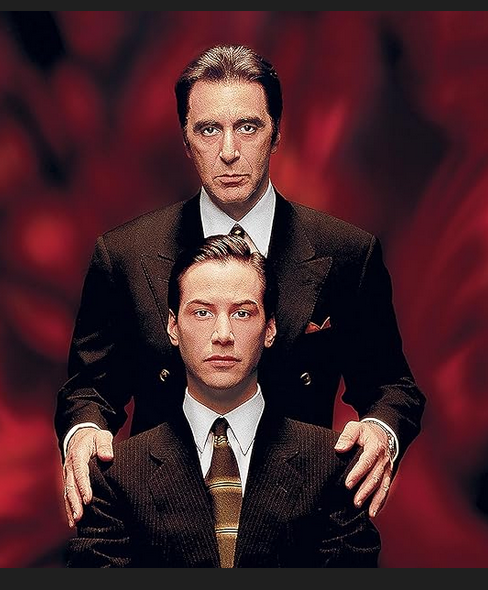
Pop culture often shows Satan as God’s equal—a dark rival with near-equal power. Movies like The Devil’s Advocate, Constantine, and the series Lucifer portray him as charismatic and almost divine.
Scripture presents a very different picture. Satan was one of God’s creations, an angel; originally a holy, high-ranking angel—possibly a cherub—a beautiful and good “being” created by God.
“You were anointed as a guardian cherub, for so I ordained you. You were on the holy mount of God; you walked among the fiery stones. You were blameless in your ways from the day you were created till wickedness was found in you.” –Ezekiel 28:14–15
Satan isn’t the ugly monster you see in fairy tales—a red, bald creature with horns and a tail. He was actually a beautiful angel. The reality is that a scary-looking angel wouldn’t convince other angels to follow him or tempt humans to believe his lies.
NOTE: The pedophiles who lure children away from their parents do not present themselves as monsters. Ted Bundy the serial killer did not convince unsuspecting women into his car because he was ugly.

God is self-existent and eternal. Satan was created—he didn’t exist before God and isn’t His opposite or rival. He’s part of the angelic order, forever subordinate.
Pride led to his rebellion. He was cast out of heaven with the angels who followed him (Revelation 12:3–9). Jesus said: “I saw Satan fall like lightning from heaven.” — Luke 10:18
What Satan’s Fall Tells Us
Like angels (and humans), Satan had free will. God gives His creatures a choice: submit to Him or pursue selfish desires.
Satan is real—the leader of a demonic hierarchy: “For we do not wrestle against flesh and blood, but against… the spiritual forces of evil in the heavenly places.” — Ephesians 6:12
How Much Power Does Satan Actually Have?
He wants you to think he’s all-powerful. But he’s on a short leash—his actions are limited by God.

In Luke 22:31–32, Satan had to ask permission to sift Peter like wheat. Jesus prayed for Peter’s faith.
1 Corinthians 10:13 promises God won’t let temptation (including from Satan) go beyond what you can bear—He always provides a way out.
The Bible makes it significantly clear; Satan has power, but it’s bounded by God’s sovereignty. He’s not equal to God, not Lord of Hell— it is Jesus who holds the keys to Death and Hades (Revelation 1:17–18).
Therefore, Satan’s ability is severely restricted by God’s sovereignty. He cannot act beyond what God allows, and for those in Christ, his ultimate power is broken through the cross and resurrection. The Bible urges vigilance (Ephesians 6:10–18) while emphasizing that greater is He who is in us than he who is in the world (1 John 4:4).
So How Does the Real Devil Get His Due?
He gets his due through deception.
1 Peter 5:8 warns that the devil prowls like a roaring lion seeking someone to devour. He is aggressive and strategic — but he cannot coerce the will.

He tempts.
He lies.
He distorts.
1 John 2:16 describes his three primary avenues of temptation:
- Lust of the eyes — craving what we see.
- Lust of the flesh — prioritizing physical or sensual desires over obedience.
- Pride of life — self-exaltation, boasting, self-sufficiency apart from God.
He doesn’t need to overpower us.
He only needs to persuade us.
How Do We Avoid His Snares?
James 4:7 gives a simple strategy: “Submit yourselves, then, to God. Resist the devil, and he will flee from you.”
Notice the order:
– Submit first.
– Resist second.
Darkness cannot overcome light. It retreats from it.

For those who belong to Christ (accept Jesus as their Lord and Savior), the Holy Spirit provides discernment, conviction, and strength. The devil has no authority over a life surrendered to God.
Scripture tells us Satan’s end is certain.
Romans 16:20 promises that God will crush Satan.
Revelation 20:10 declares his final defeat.
Summary
- Satan is not omnipotent — he is a creature.
- His authority is limited and derivative.
- He cannot override God’s sovereignty.
- He cannot separate believers from God’s love.
- His defeat is guaranteed.
So when do we truly “give the devil his due”?
When we tolerate compromise.
When we entertain deception.
When we prefer darkness to light.
That’s when he gains ground.
But when we walk in God’s light —
the devil has no claim, no foothold, no victory —
and that is precisely what he is due: nothing.
Give God a chance!
Turn toward Him and be filled with His light.
Your comments are welcome – please review House Rules.
To protect your anonymity use a pseudo name.
Your email will not be seen, but a fake email is ok too.
Leave a Reply