Leroy recently passed away at the young age of ninety-one. I had the privilege of knowing him for the last ten of those years. More importantly, I witnessed how God transformed his life during that time.
At Leroy’s celebration of life, I learned a term I had not heard before: church hurt.
Nearly sixty-five years ago, Leroy shared with his pastor that he believed evolution occurred before the birth of Jesus. The pastor was offended and asked why Leroy even bothered attending his church. Leroy left — and worse, he abandoned his belief in God because one of God’s representatives had insulted him.

That is what many pastors today call “church hurt.” Instead of lovingly correcting someone, a shepherd rebukes harshly and ends up pushing a soul away from God rather than drawing him closer. That pastor failed to shepherd Leroy the way the Lord intended.
And honestly, even if Leroy’s theology was mistaken, why should that have been offensive? John 3:16 makes it clear that salvation rests on believing in Jesus. The door of grace is not guarded by perfect doctrine.
A Father Lost — and Found Again
Before I met Leroy, he had been married twice. He had four children with his first wife and became a stepfather to five more with his second. One of his deepest regrets was that his second wife resented his four children and did not welcome them into their home. Over time, Leroy allowed that tension to distance him from his children — for more than twenty years.

It was not until after his second wife passed away and he married his third wife that his four children reengaged with their father.
What amazed me was not just that reconciliation happened — but how it happened.
His children, now in their sixties, welcomed their father back into their lives without rebuke. Without humiliation. Without rehearsing old wounds.
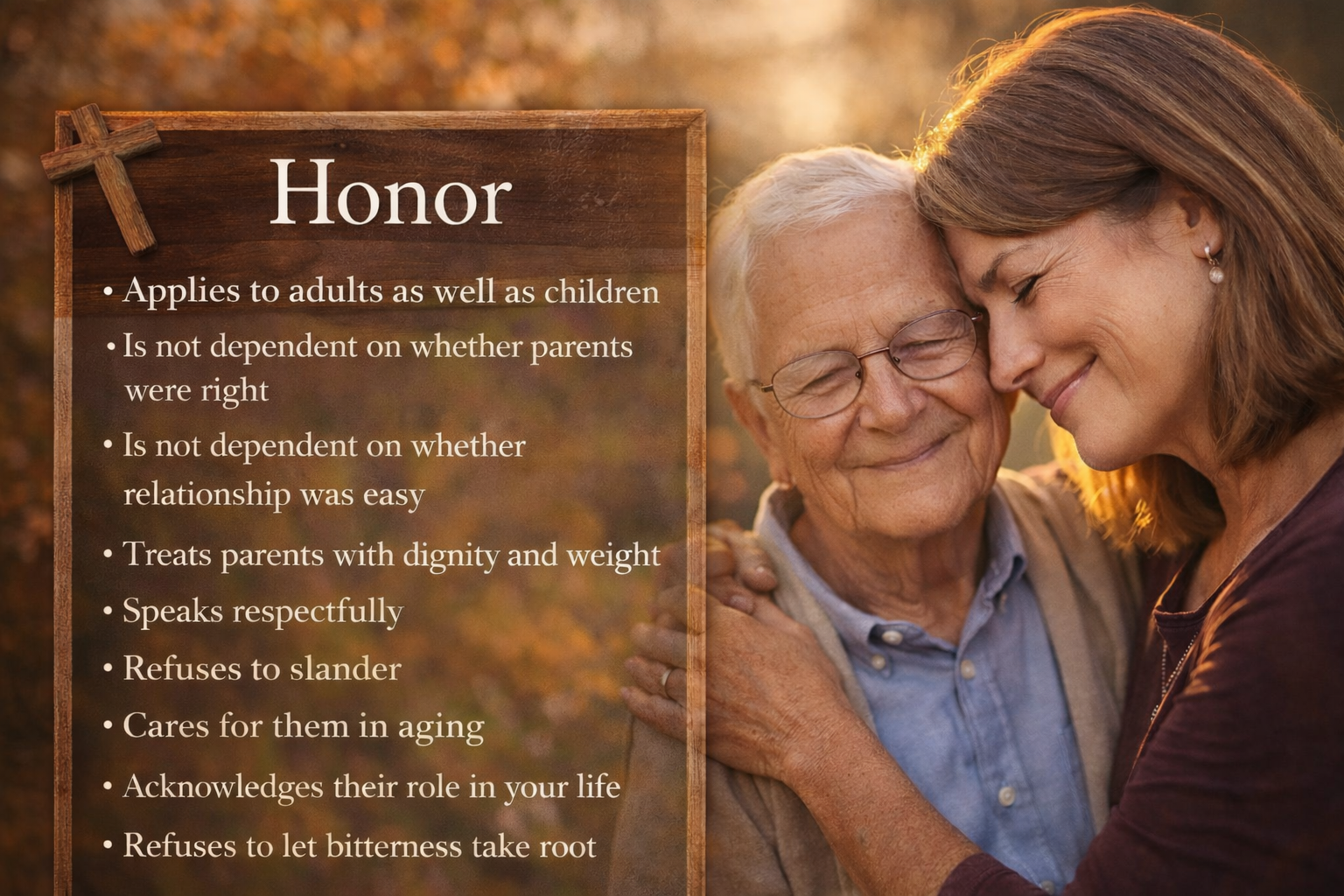
They lived out the Fourth Commandment:
“Honor your father and mother.”
Notice the commandment does not say obey. That changes with age.
Young children are expected to obey their parents.
Obedience
• Submission to authority
• Primarily for minors
• Connected to instruction and protection
• Time-bound
But honor does not expire.
Honor is deeper than compliance.
It is a lifelong posture of the heart.

For ten years, I watched these adult children rebuild their relationship with their father. They certainly did not agree with his yielding to his second wife’s wishes. But they honored him. They made space for him. They chose restoration over resentment.
The Greater Restoration
But something even more beautiful happened.

The man who had once abandoned church — and worse, his faith — turned back toward God.
With the encouragement of his third wife, Leroy began attending a Bible-based church. Eventually, he was baptized and publicly professed Jesus Christ as his Lord and Savior.
Not long after, he was diagnosed with terminal brain cancer. The disease took him within four months.
Yet even in that short window, there was grace.
Children and stepchildren surrounded him during his illness. They honored him with their presence at his bedside and at his celebration of life. Everyone had the opportunity to say goodbye.
The Patient Love of God
In my humble opinion, God did not simply bless Leroy with ninety-one years of life.

God was waiting.
Waiting for a prodigal son to come home.
Through decades of distance and disappointment, God remained patient. He waited for Leroy to open his heart again.
Leroy missed years with his children and some of his grandchildren. That loss was real. But he did not miss the relationship that mattered most — the one with his Creator.
Until his diagnosis, Leroy lived actively — driving, golfing, gardening, traveling. He thought he would make it to one hundred.
As his daughter said during the eulogy:
“Well Dad, you didn’t make it to 100… but you made it to a place so much better.”
And perhaps that is the deeper lesson.
Honor heals families.
Grace restores prodigals.
And God never stops waiting for us to turn toward Him and be filled with His light.
Your comments are welcome – please review House Rules.
To protect your anonymity use a pseudo name.
Your email will not be seen, but a fake email is ok too.
Leave a Reply