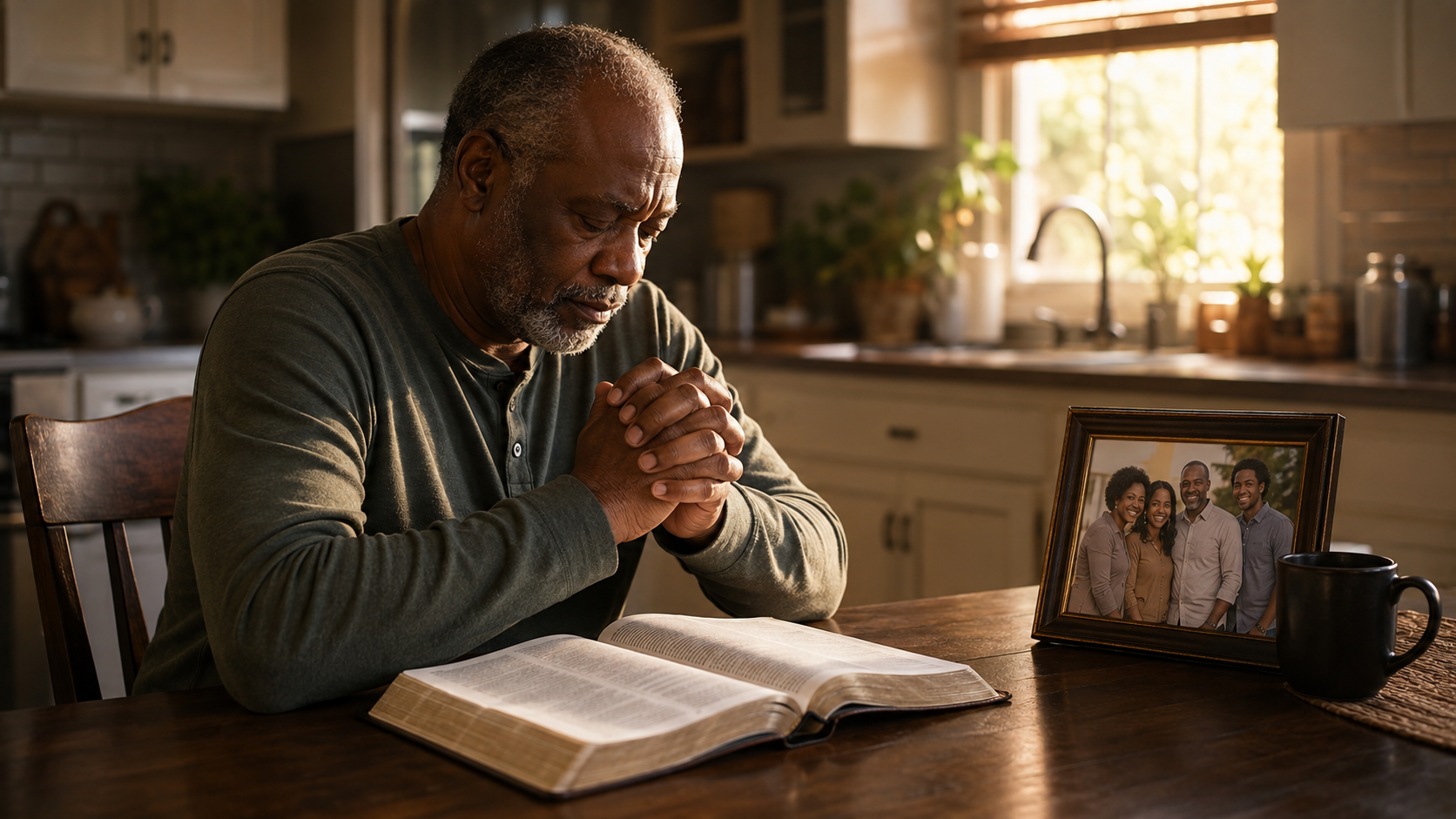
Trusting God With the Salvation of Those We Love
I am the type of person who has to analyze everything.
Several years ago I decided to buy a pickup truck but refused to pay what I considered an outrageous price for a new one. I dragged my wife around to look at twenty-one used trucks before finally ordering a new one.
After all that searching, I discovered that the difference between a new truck and a two-year-old model was only about $8,500. For that amount, I could choose the color and features I wanted—and avoid inheriting the 48,000 miles already on the used ones.

My exasperated wife finally said, “You can overthink a left-hand turn.”
I didn’t understand her frustration. This was a significant investment. A prudent person shouldn’t allow emotion to drive a decision of that size.
I call my process “self-discovering.” Sometimes I have to work through something carefully before the answer becomes clear. For some people, that takes minutes. For others, it takes months—or even years.
It reminds me of the process through which I came to Christ.
It took years—too many years—for me to recognize that a relationship with Him was the highest priority of my life. I was busy pursuing the things I believed mattered more: building a career, providing for my family, investing wisely, and preparing for a comfortable retirement.
I was never an atheist. I was raised in a family that honored God. I believed in the Father, the Son, and the Holy Spirit.
But believing certain facts about God and entrusting your life to Him are not the same thing. God is not interested in remaining a distant deity whom we acknowledge occasionally. He is our Creator, and He rightfully belongs at the center of our lives.
When Religion Is Not Enough
I was raised in a religion rich in beautiful traditions, sacraments, memorized prayers, and feast days. I assumed that if I attended church faithfully, repeated the prescribed prayers, and participated in the sacraments, I could earn my way into heaven—much as I had earned the grades necessary to enter college.
I didn’t even believe I needed to read the Bible. My religion did that for me.

Then God began to expose the void within me—an unresolved yearning for an intimate relationship with the One who created the heavens and the earth.
Some people call the experience being born again, as Jesus described it in John 3:3. Others call it their “God moment.” I call it my spiritual awakening.
But it was more than self-discovery. I did not reason my way into salvation. God opened my eyes to something that had always been true: I could never earn eternal life because Christ had already done everything necessary to purchase it for me.
I had to receive His gift by placing my faith in Jesus Christ—trusting in what He had done for me rather than in anything I could do for myself. Salvation was by God’s grace, through faith—not the reward for my religious performance.
The early days felt like a honeymoon. They were filled with gratitude, light, and a clear awareness of the Holy Spirit working within me. The void that nothing else could fill was finally being satisfied.
Then I realized that this was not merely a wonderful spiritual experience. It was the beginning of a transformed life.
Although believers become part of God’s family, we must still live in this world. Bills still arrive. Health problems still come. Losses still hurt. But when Christ becomes Lord, He does not ask to occupy one compartment of our lives. He lays claim to all of us.
And following Him can carry a personal cost.

When Following Christ Changes a Family
Turning toward God means turning away from the values and priorities of this world. That sounds wonderful when it means leaving obvious sin behind.
But what happens when following Christ also means questioning the religion practiced by your parents, siblings, and generations before them?
Religious loved ones may not celebrate that departure—especially if they believe their tradition represents the one true faith. To them, your spiritual awakening may look like spiritual rebellion. What you understand as drawing closer to Christ may appear to them as falling away from God.
One of my closest loved ones became so distressed about my change in beliefs that she asked me to speak with a clergyman from her church. I agreed—and then discovered that he was an exorcist.

When I confronted her, she admitted that she believed I might be possessed by a demon or, at the very least, influenced by one. When I asked my pastor how I should respond, he advised me not to confront her further but to pray for her.
Although the family love for each other continues, relationships change.
Submitting to the Lord affects everything—including how the people closest to us understand us.
The Grief of Loving Someone Who Does Not Believe
Disagreement with religious family members is difficult enough. But what about the loved one who rejects Jesus altogether?
The possibility that someone we love might leave this world without receiving Christ is profoundly sobering. It grieves the believing parent, spouse, brother, sister, son, daughter, or friend.

We want to say the perfect thing. We search for the argument that will finally persuade them. We may apply more pressure because the stakes are eternal.
But we cannot believe for another person, and we cannot force anyone into salvation. Salvation is God’s work, and every person must respond personally to Jesus Christ.
Scripture gives us both a responsibility and a limitation.
We can pray that God will:
- Open their hearts to the gospel (Acts 16:14).
- Remove their spiritual blindness (2 Corinthians 4:4–6).
- Grant them repentance (2 Timothy 2:25–26).
- Convict them of sin and their need for Christ (John 16:8).
- Place faithful believers in their lives (Matthew 9:37–38).
- Give us wisdom and opportunities to speak (Colossians 4:3–6).
Prayer is not a way to override someone’s will. It is an appeal to the only One who can awaken a spiritually dead heart.
Perhaps the hardest discipline is resisting the urge to force the outcome ourselves.
Even Jesus was rejected in His hometown (Luke 4:24–29). Members of His own family initially thought He was out of His mind (Mark 3:20–21), and His brothers did not yet believe in Him (John 7:5).
If those closest to Jesus could misunderstand and reject Him, we should not assume that another person’s rejection means we have failed to explain Him properly.
Sometimes They Need to Hear It From Someone Else
When my wife first took up golf, my free instruction was usually met with, “Yeah, but…”
That little word but – erased everything I had said before it.

Eventually, I purchased professional lessons for her birthday. When the golf pro offered some of the same corrections I had given her, she replied not with “yeah but” as I expected, but with “Yes, my husband taught me that.”
Human nature hasn’t changed in two thousand years.
Sometimes the people closest to us have the greatest difficulty hearing us. They remember our weaknesses, know our history, and may still see us as the person we were before Christ began changing us.
Perhaps our role will not be to lead that loved one personally to Christ, but to pray persistently, live faithfully, speak when God provides the opportunity, and trust Him to place the right person in that individual’s path at the right time.
We are responsible for faithfulness—not for producing the outcome.
Jesus said:
“No one can come to me unless the Father who sent me draws him.”—John 6:44
When the Waiting Lasts for Years
Some people come to Christ after years—even decades—of resistance. The thief beside Jesus turned to Him during the final hours of his life (Luke 23:39–43).
As long as our loved ones are alive, we have reason to pray, love, hope, and remain available. We should neither presume that they will eventually believe nor conclude that they never will.
My pastor prayed for his father’s spiritual awakening for nearly forty years. Then, after all those years of prayer and waiting, his father finally turned toward God and was saved in his late eighties.
Imagine the temptation to become discouraged during those forty years. Imagine how many times he may have wondered whether his prayers were accomplishing anything.
God’s silence is not evidence of God’s absence. Another person’s present resistance is not proof of that person’s final decision.
Loving Them Without Carrying What Belongs to God
So how do we live with the burden?
We carry our loved ones to God in prayer, but we do not attempt to carry the responsibility for their salvation. That burden belongs to Him.
We speak the truth without turning every conversation into a sermon. We demonstrate the gospel through patience, humility, forgiveness, and love. We remain ready to explain the hope within us, but we resist the temptation to pressure someone into making a profession of faith merely to relieve our anxiety.
Most importantly, we trust that God loves them even more deeply than we do.
The Holy Spirit gives us understanding, discernment, and a peace that surpasses all understanding. That peace does not come from knowing how our loved one’s story will end. It comes from knowing that God remains sovereign while the story is still being written.
We may not be the person who finally leads them to Christ. We may never witness the moment for which we have prayed. But we can remain faithful in the role God has given us.

Pray without ceasing.
Love without compromising the truth.
Speak when God opens the door.
Wait without surrendering hope.
And when the weight becomes too great, place that loved one back into the hands of the only One who can save them.
We cannot open a human heart.
But God can.
Your comments are welcome – please review House Rules.
To protect your anonymity use a pseudo name.
Your email will not be seen, but a fake email is ok too.
Leave a Reply